
Septic Smells in the Summer? Here's What Your Nose Is Telling You
There's nothing quite like a Texas summer evening on the back porch, until the smell hits you. If you've caught a whiff of something foul drifting up from your yard, near your drains, or around your tank lid, you're not imagining things. Summer heat has a way of turning minor septic odor problems into hard-to-ignore warning signs. And while a little smell isn't always a crisis, it's rarely something you should brush off.
At Liberty Hill Septic & Excavation, we work with homeowners across the Hill Country and surrounding areas who are dealing with exactly this. Here's what those odors might be telling you, and what to do about it.
Why Summer Makes Septic Odors Worse
Warmer temperatures don't create septic problems out of nowhere, they amplify what's already there. The heat accelerates bacterial activity inside your tank, which can increase gas production. It also dries out the soil around your drain field, reducing the ground's ability to filter and absorb wastewater properly.
Add in increased household water usage from summer guests, kids home from school, and outdoor activities, and your system is under more stress than it sees most of the year. That combination is a recipe for septic odor problems that were barely noticeable in March to become hard to ignore by July.

Common Sources of Septic Odors in Summer
Hydrogen Sulfide Gas (That "Rotten Egg" Smell)
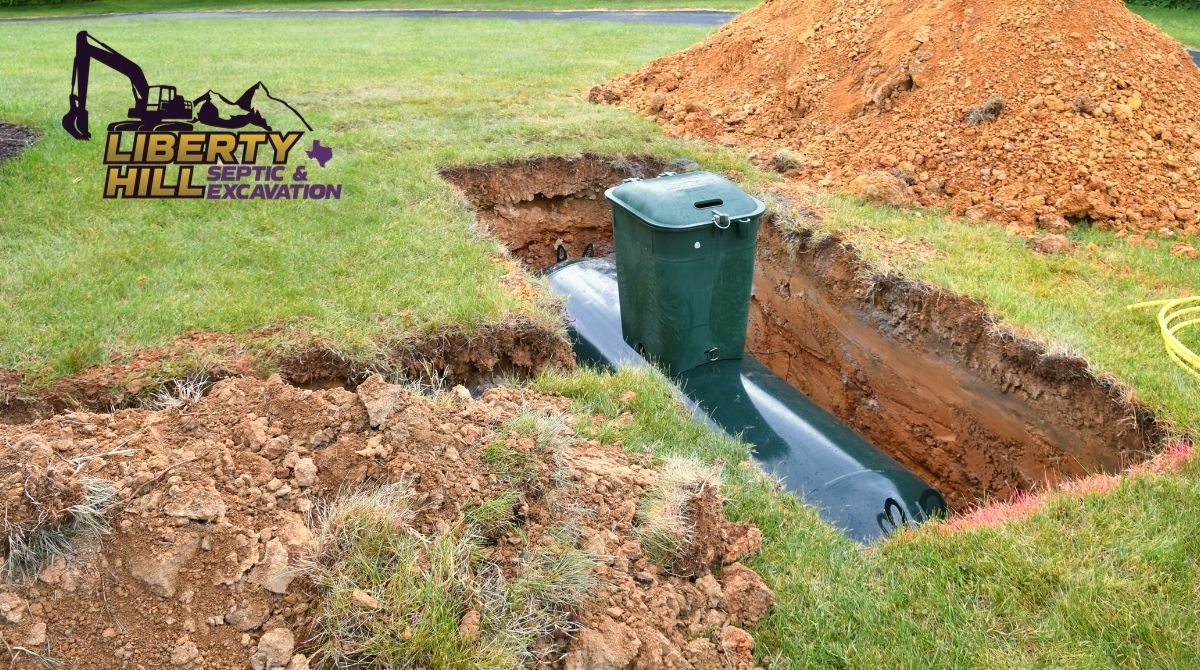
That unmistakable rotten egg odor is hydrogen sulfide gas, a natural byproduct of bacterial breakdown inside your tank. A little of this is normal, but if you're smelling it strongly near your tank lid, around floor drains, or outside near the drain field, something isn't right.
Possible causes include:
- A cracked or poorly sealed tank lid
- A full or overloaded tank that needs pumping
- Venting issues in your home's plumbing stack
Odors Coming Up Through Drains or Toilets
If the smell is coming from inside your home, particularly from toilets, sinks, or floor drains, it's usually a plumbing vent issue. Vent pipes help release gases safely above your roofline. When they're blocked by debris, bird nests, or improper installation, those gases get pushed back down into your living space. Summer heat intensifies the odor and makes it more noticeable.
Musty or Sewage Smell in the Yard
A persistently wet or sewage-smelling area in your yard, especially over the drain field, is a red flag. This often points to a saturated or failing drain field where effluent is surfacing rather than absorbing. This is one of the more serious septic odor problems because it can indicate a system that needs repair or replacement.
Learn more about septic system repairs and what to expect from Liberty Hill Septic & Excavation.
Smell Near the Tank After Rain
Rain can actually push odors out of the ground temporarily, but it can also reveal a deeper issue: if your tank or drain field connections are compromised, rainwater infiltration can cause the system to overflow or back up. If odors spike every time it rains, that's worth investigating.
When Is It a DIY Fix vs. a Call to the Pros?
Some septic odor problems have simple solutions a homeowner can address:
- Dry P-traps — Run water in rarely used drains (like guest bathrooms or basement sinks). The water in the trap evaporates over summer and lets gas come through. Simply running the tap for 30 seconds can fix this.
- Add water to outdoor cleanouts — Same principle applies to any outdoor access points that may have dried out.
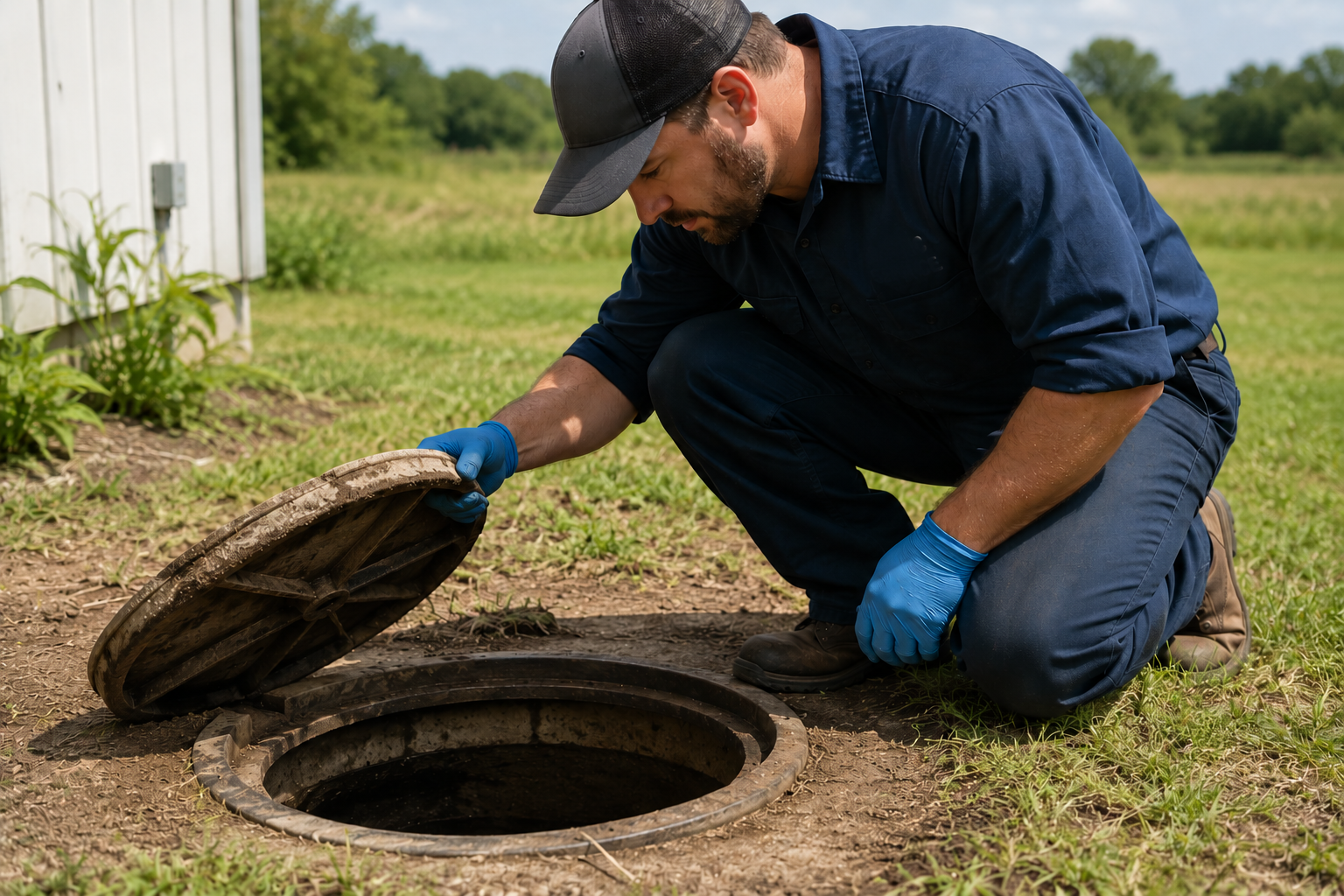
- Check for loose or cracked tank lids — If you can safely access your tank lid and notice cracking or gaps, a temporary sealant can help until a professional inspection.
But if you're noticing any of the following, it's time to call:
- Strong, persistent odor in the yard, not just occasional whiffs
- Slow drains or gurgling sounds in multiple fixtures at once
- Wet or unusually lush patches of grass over the drain field
- Sewage backup into the home
Contact Liberty Hill Septic & Excavation for an inspection before a manageable issue becomes an expensive repair.
How Summer Habits Can Make Odors Worse
It's worth knowing that what you put into your system over summer can directly affect odor levels:
Increased water use: More showers, laundry from outdoor activities, and running hoses connected to indoor plumbing can overwhelm a tank that might be borderline full.
Garbage disposal use: Grilling season means more food scraps. Heavy garbage disposal use sends solids into the tank that weren't there in winter, accelerating buildup.
Harsh cleaners: Summer cleaning often means stronger disinfectants and bleach. These kill the beneficial bacteria your tank depends on to break down waste, which can lead to increased gas production and, yes, more odor.
According to the U.S. Environmental Protection Agency (EPA), household chemicals and excessive water use are among the leading contributors to septic system stress and failure.
The Role of Regular Pumping in Preventing Odor Issues
One of the most overlooked solutions to recurring septic odor problems is surprisingly simple: routine pumping. Most systems serving a family of four should be pumped every 3–5 years. But if you've been putting it off, summer is often when the consequences show up.
When a tank is at or near capacity, gases have nowhere to go except back up through the system. A pump-out relieves that pressure, removes built-up solids, and gives your tank a fresh start.
Explore Liberty Hill Septic's full range of septic services — from pumping and maintenance to full system design and installation.
For additional guidance on maintaining a healthy system, the National Onsite Wastewater Recycling Association (NOWRA) offers educational resources for homeowners.
Don't Wait Until the Smell Gets Worse
Septic odor problems are your system's way of asking for attention. Caught early, most issues are straightforward and affordable to address. Left alone through a long Texas summer, they can escalate into drain field damage, sewage backup, or a full system failure, none of which are quick or cheap fixes.
If you're in Liberty Hill, Leander, Georgetown, Burnet, or anywhere across the Hill Country, the team at Liberty Hill Septic & Excavation is here to help. We'll take a look, give you a straight answer, and get things handled right.
Reach out today to schedule an inspection or ask a question — no pressure, just honest help from your local septic experts.
Frequently Asked Questions
Why does my yard smell like sewage in the summer but not in winter?
Heat accelerates bacterial gas production in your tank and dries out the soil in your drain field, reducing its filtering capacity. These factors combine to make septic odor problems more noticeable in warm months even when your system hasn't changed.
Is it dangerous to smell septic gas inside my home?
Hydrogen sulfide gas in small amounts smells unpleasant but is generally not dangerous at typical residential levels. However, persistent indoor odors can indicate a venting issue or backup that warrants prompt professional attention. If the smell is very strong or you feel unwell, ventilate the space and call a plumber or septic professional.
How do I know if my drain field is failing?
Signs include soggy or unusually green patches of grass over the drain field, a persistent sewage odor in the yard, slow drains throughout the house, and in more advanced cases, visible sewage surfacing on the ground. Any of these warrant an immediate inspection.
Can I use septic tank additives to reduce odors?
Many additives are marketed to boost bacterial activity and reduce odors, but results vary significantly. The EPA does not recommend relying on chemical additives as a substitute for regular pumping and proper maintenance. If you're experiencing odors, the underlying cause should be diagnosed rather than masked.
How often should I have my septic system inspected?
A general rule is a professional inspection every 1–3 years and pumping every 3–5 years depending on household size and usage. If you've recently purchased a home with a septic system and don't know its history, an inspection is the right starting point.